
Can Rabbits Live With Dogs or Cats? A Safe, Thoughtful Guide
Can rabbits live with dogs or cats safely? Learn how to introduce pets slowly, reduce stress, and create a calm, secure home where your rabbit can feel safe and thrive.
Amy Jackson & The Hot Cross Buns
3/20/20264 min read

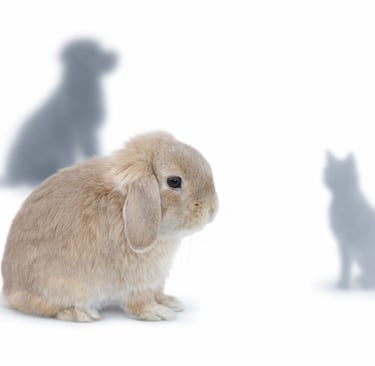
Rabbits and Other Pets: Can They Live Together Safely?
One of the most common questions families ask before bringing a rabbit home is whether rabbits can safely live alongside other pets. It’s a good question—and an important one—because the answer isn’t as simple as yes or no.
Rabbits can live in homes with other animals, and many do quite peacefully. But those relationships don’t happen automatically, and they don’t work the same way for every household. The outcome depends on the personalities involved, the environment, and—perhaps most importantly—the way those relationships are introduced and managed over time.
Understanding How Rabbits Experience Other Animals
To understand how rabbits respond to other pets, it helps to remember how they are wired.
Rabbits are prey animals. That doesn’t mean they are constantly afraid, but it does mean they are naturally aware of anything that could potentially be a threat. They watch, they listen, and they quietly assess what is happening around them.
Because of this, even a friendly dog or a curious cat can feel unpredictable at first. A quick movement, a burst of energy, or even intense interest can be enough to make a rabbit feel unsure.
When a rabbit feels unsure, they don’t relax into connection—they become cautious. Until they feel safe, that caution remains.
Can Rabbits Get Along with Other Pets?
In some homes, yes.
Rabbits often do well with animals who are calm, predictable, and largely uninterested in them. Older dogs with low prey drive and cats who prefer to observe from a distance are often easier companions than young, energetic animals who want to chase or play.
Even in those situations, though, the relationship develops slowly. It is not something that should ever be assumed or rushed. There are also many cases where full interaction simply isn’t a good idea, particularly when another animal shows strong interest in the rabbit or tends to become excited around small, fast-moving animals.
Why Slow Introductions Matter
When people imagine introducing pets, they often picture bringing them together and letting them “figure it out.” With rabbits, that approach tends to create stress rather than understanding.
A better approach begins with distance.
Allow each animal to become aware of the other without direct contact. They can hear one another, smell one another, and gradually become familiar with the presence of something new without feeling threatened by it.
Over time, if both animals remain calm, very brief and carefully controlled introductions can take place. These should happen in a quiet setting, with close supervision, and should end before either animal becomes tense or overstimulated.
Moving slowly may feel unnecessary in the moment, but it is what allows trust to develop instead of fear.
The Role of Supervision
Even when things seem to be going well, supervision remains essential.
Animals do not always respond the same way every time. A dog who was calm yesterday may become excited today. A rabbit who felt comfortable may suddenly feel uncertain if something changes.
Because rabbits are physically fragile, even playful behavior from another animal can cause serious harm. For that reason, rabbits should never be left alone with other pets, no matter how trustworthy those pets may seem.
When Separation Is the Kindest Choice
In some homes, the safest and most respectful approach is not integration, but separation.
If a dog watches the rabbit closely, follows their movement, or attempts to chase—even occasionally—that tells you something important. The dog is interested, and that interest carries risk.
In those situations, it is far better to create a home where the rabbit and dog live comfortably in separate spaces than to try to build a relationship that may never truly feel safe.
Separation is not a failure. In many cases, it is what allows both animals to relax and live peacefully in the same home without pressure or stress.
Creating a Safe Environment
When a home includes multiple species, structure matters far more than intention.
A rabbit should have a clearly defined space where they can rest and move about without the possibility of another animal entering. When they are out exploring, the other pets should be securely contained.
Closed doors, exercise pens, and consistent routines provide a level of safety that supervision alone cannot guarantee. Relying on being “careful” in the moment is much less reliable than having a system that prevents accidents altogether.
Listening to Your Rabbit
Your rabbit will give you clear signals about how they feel.
A rabbit who feels safe will move freely, explore their surroundings, and settle into a comfortable rhythm. A rabbit who feels uncertain may freeze, hide, or avoid open areas where they feel exposed.
These responses are not personality flaws—they are communication. They tell you when something needs to slow down, or when more space is needed.
If you’d like a deeper understanding of how stress affects rabbits, you may find this helpful:
👉 Rabbit Stress and How to Reduce It
A Gentle Perspective
It’s natural to hope for a home where all of your animals coexist easily and even interact.
Sometimes that does happen, but more often, a peaceful home is one where each animal feels secure in their own space, without pressure to engage.
Rabbits do not need interaction with other species to be happy. What they need most is a calm, consistent environment where they feel safe enough to relax and be themselves.
Thinking About Bringing a Rabbit Home?
If you already have other pets, taking the time to think through your setup ahead of time is one of the kindest things you can do—for both your rabbit and your existing animals.
👉 Questions to Ask Before Bringing a Rabbit Home
👉 View Available Buns
hcbhollands@gmail.com
Copyright 2017-present. All rights reserved by Hot Cross Buns Holland Lops. All images and content fall under the sole ownership of Hot Cross Buns Holland Lops.